The Devil with Red Whiskers: A Bigfoot in Brooklyn
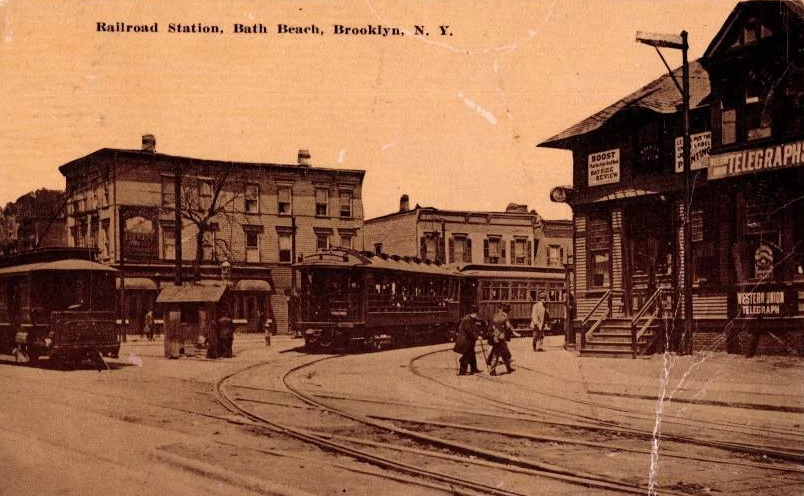
Brooklyn isn't usually the first place that comes to mind when discussing Bigfoot. Yet in 1891, many witnesses insisted a towering, shaggy 'Devil with Red Whiskers' was roaming the quiet bayside community of Bath Beach.
Brooklyn has produced many monsters over the years—murderous mobster Roy DeMeo, "Son of Sam" David Berkowitz, and a certain former owner of Little Saint James island in the Bahamas, just to name a few. But in April of 1891, some Brooklynites were convinced that the devil himself was stalking their streets.
The alleged monster, known variously as the "Phantom Giant" and the "Devil with Red Whiskers," generated terror in the communities of Bath Beach, Bensonhurst, Gravesend Beach and the former Unionville (now part of Bath Beach). Many residents were afraid to venture outside after dark, while others formed vigilante committees to seek out the beast, armed with revolvers and clubs.
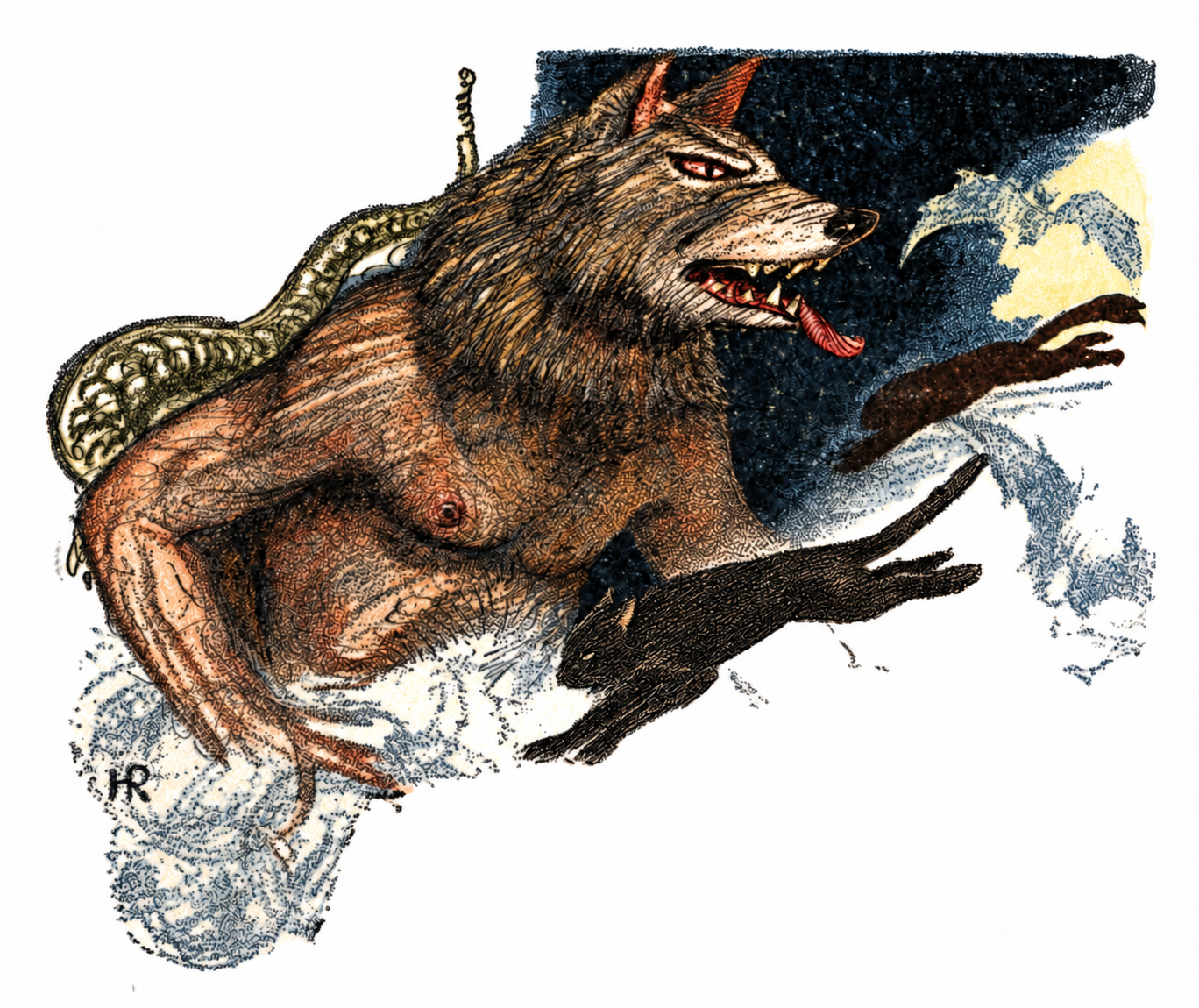
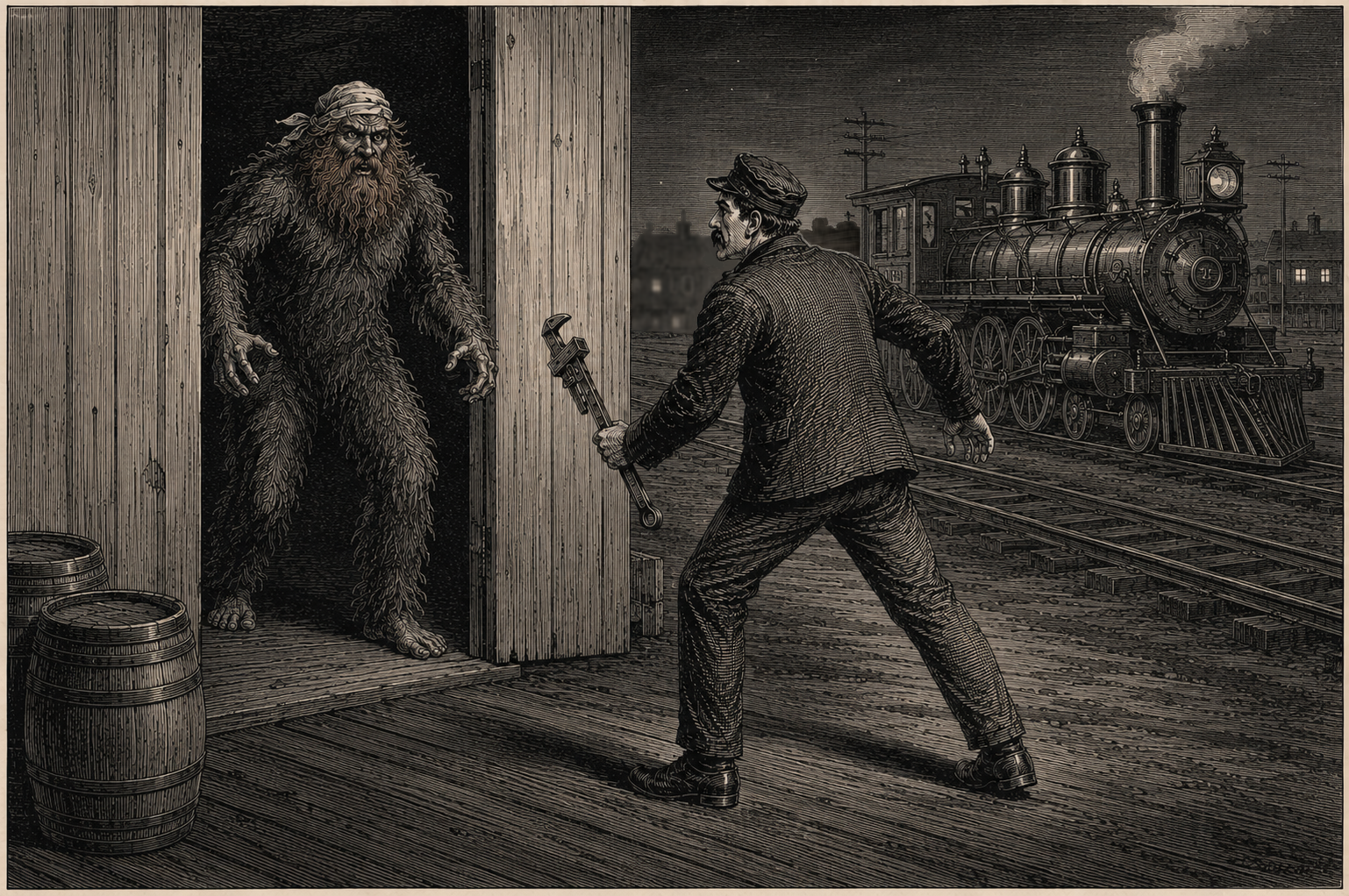
The Phantom Giant was said to be covered in long hair, with flaring red whiskers and a "Satanic howl." It was variously described, some saying that it resembled a bear with a human head, others claiming it was the very image of Satan.
The most prominent report came from William Bell, an engine dispatcher with the Brooklyn, Bath and West End Railroad (or George Bell, night hostler at said trainyard, according to the New York Sun's coverage). Bell filed a report with his superior, Master Mechanic Boyle, providing a minute description of his encounter with the strange entity while on duty in the Unionville yards at about 2:30 a.m. on Easter morning, March 29. It was pitch dark, the moon only peeking out rarely from behind the veil of clouded sky; a sea-wind moaned dolefully in the distance. Bell, who Boyle noted was an intelligent, truthful and sober man, was working in one of the locomotive sheds by flickering torch light. Bell stood on the running board of a train engine, whistling a tune as he leaned over the boiler to fix the packing valve. The locomotive was opposite a large, window-like opening that looked into an adjoining shed housing "Old 6," a rusty, dust-covered engine that hadn't been operated since the previous summer. He was alone, the boy assisting him having gone over to the shop on an errand. Suddenly, Bell was interrupted by a thunderous, blood-curling roar. "Baw-w-w-w-wr-r-r-ow!" is how he would later describe it to the Sun, which would amusingly comment, "The sound as repeated by Mr. Bell is very difficult to reproduce in type. Read the above as loud and as gruffly as you can, open your eyes very wide, wind up with a scream, and you have it."
"I had a wrench in my hand, when I saw the thing pop up at one of the windows of the carhouse, near the Unionville depot," Bell told the Brooklyn Citizen newspaper. "The monster was on the inside of the building, and I got a glimpse of him. To give an accurate description of him, I would say that he is about six feet two inches in height, the body resembling that of a gorilla, being covered with long hair. It seemed to me that the thing wore a crimson mask, and had a handkerchief bound tightly about its head."
The Sun, which does appear to have interviewed Bell directly, painted a slightly more sensational picture of the event compared to the coverage in other newspapers. Bell is quoted as saying, "I looked up quickly and saw leaning out of the opening in the wall the most horrible thing I ever dreamt of. It looked like a man and a bear at the same time. The face was covered with shaggy red hair, and he had long white tusks. A felt hat was on his head and a red rag was tied around his forehead. The body was hairy, and the thing stared at me with great green eyes. My hair rose—I felt it rising—and I perspired all over."
The monster grinned at Bell in a most ghastly manner and then dropped down from the window. "A second later and I would have flung the heavy wrench I held in my hand plump in his face, but I was paralyzed for the time," recalled Bell. Soon recovered from his fright, Bell jumped off the engine he had been repairing. He ran out around the rear of the buildings into the adjoining shed, groping his way through the dark to the window at which the beast had stood. Bell called out for the interloper to remain still or he would shoot, but saw nothing.
Squinting through the darkness, Bell noticed the creature sneak out of the shed. He chased after it into the railroad yard. Just then, the moon shone through the clouds and Bell saw the monster at 100 yards distant. The red-whiskered devil stopped suddenly and looked back at Bell, seemingly to give fight. The railroad worker hesitated. The creature then turned and resumed its flight up Gravesend Beach Road, and Bell continued his pursuit. At the residence of Dr. Spier, the monster changed direction toward Bensonhurst. Bell followed it for two miles across open country, until the beast suddenly vanished at a point in the road opposite St. Mary's Catholic Church.
"I went back to the yards shivering like a baby," Bell told the Sun. "I have a sort of idea that it was a man dressed up in a false face and bearskin, for I don't believe in ghosts; but then, there's no telling. He was over seven feet high, and could run like the very devil." Bell showed the reporter a shiny revolver he carried on his person. "I'm waiting for him to come around again, and then he'll get it plump."
Bell wasn't alone in encountering the mysterious fiend. "The thing, whatever it is," said Boyle, "has scared a number of people. Night before last a young lady who came up from Brooklyn on the last train met it just as she got off the cars at Unionville. Of course no one with sense believes it to be supernatural, but whatever, or whoever, it is, the people hereabouts have become greatly exercised over its appearance. The girl who it frightened, I am told, is now confined to her bed by nervous prostration. I think it is some fellow of the 'Jack the Ripper' stripe, who is trying to get up a sensation, and has taken this means to scare folks. But if he again appears around the railroad company's property he will meet with warm reception."
Additional witnesses came forward, recounting their sightings of the monster during the previous week. John Riley (or Reilly), employed as an overnight yard hand at the Unionville station, also claimed he had encountered the monster there, and his description tallied with Bell's. Riley was so frightened by the experience that he refused to return to work. Willie Perkins, a boy employed at the railroad company's car shops, also left his job, fearing another appearance of the "giant." Benjamin Curtis, a local night watchman and "a sober, industrious man," told the Sun he had seen the monster at close range. The Citizen reported that a George Curtiss (possibly the same witness, but it's unclear) had met the thing in Bensonhurst some nights earlier and said it "resembles a devil." Edward Canavan, of Gravesend Beach, said he would shoot the monster on sight, as it had recently encountered and scared his wife. The saloon keeper at the Unionville depot crossed paths with the phantom on his way home from work and ran away screaming.
Other newspapers in the state treated the claims with wry amusement. The Rochester Democrat and Chronicle wrote that, with the advent of "His Satanic Majesty" in Bath Beach, "Sea-serpents can now take a rest. They are only a second-class attraction." In a similar vein, the Buffalo Sunday Morning News opined, "The interviews which the Bath Beach people have had with the afreet have been of a somewhat hasty nature, but judging from their reports this must be the dodge of some summer resort proprietor who is working a new substitute for the sea serpent racket."
Was this anomalous being an unusual occurrence for New York City? "I lived in Bath Beach for years and it would fit right in," quipped Robert Damon Schneck, Historian of the Strange, in a 2026 Facebook post that first clued me in to this story.
Indeed, the Red-Whiskered Devil wasn't the only strangeness plaguing Brooklyn in 1891...
Neighbors of Anna Drosky, "a mature maiden of 40 summers," rushed into her residence at No. 1335 Avenue A early on the morning of Aug. 1 upon hearing her screams for help. There, the amazed neighbors found Anna "doing fierce battle with a pillow." After some hesitance, Drosky revealed that a wooden cigar store Indian "had entered her room, and, in the shape of the pillow, had been making violent love to her." As she was telling this thrilling tale, a look of terror suddenly came into her eyes. Pointing to the door, Drosky remarked in blood-curdling tones, "There is another, but it is the devil this time, sure." With that, she bolted straight through a (presumably open) window. Thankfully, she only fell one story and was unhurt. The sympathetic neighbors wrapped the frightened woman up in a bed quilt and called for an ambulance. As Drosky persisted to doctors that she was being followed by "the evil one," they concluded to place her in an "insane pavilion" for a time.
In the fall of 1891, New Yorkers were whipped into excitement over the regular apparition of a ghost on the Brooklyn Bridge. The nocturnal visitor, who was "of the feminine persuasion," made its first appearance near the center of the span at midnight around Oct. 22. Every night since, it had been walking in view of thousands of excited spectators who gathered to watch it. So intense was the jam caused by onlookers that the gate of the bridge had to be closed. Nobody was able to account for "this remarkable occult demonstration," according to a news report.
However, the Devil with Red Whiskers bears closer kinship with the numerous "Wild Man" reports that filled U.S. newspapers of the 19th and early 20th centuries. With roots in European "Wild Man of the Woods" folklore, many of these mysterious accounts appear to be describing people living on the edge of society, such as hermits, vagrants and the mentally ill. Some Wild Men were said to have reverted to an animal-like state, even growing copious hair over their bodies.
A good number of these stories, alternatively, described hairy, man-like creatures that bear a striking resemblance to the Bigfoot legend we know today. For example, a widely disseminated April 1891 dispatch described "a large tall form, somewhat resembling that of a human being, but appearing to be naked and covered with a growth of hair" residing within a subterranean cavern in Vernon, Indiana. Alexander Shepherd, a real estate agent, was showing a farm to a prospective buyer when the pair stumbled upon a small entrance to the cavern beneath a large hill. Procuring a lantern, the pair began exploring the lofty underground space, wondering at the natural rooms glittering with stalagmites and stalactites. Their awe suddenly turned to horror when they noticed, standing only a few feet away from them, what seemed to be "a gorilla, or some human-shaped being resembling a wild man, naked and covered with, apparently, a coat of grizzly brown hair." It appeared to be over six feet in height. After gazing at the intruders for a moment, the creature issued a low, guttural sound and ambled off into the deep, impenetrable darkness of the cavern. Subsequently, the explorers discovered a natural store room containing piles of potatoes, corn, wheat, and the bones of fowls. The Wild Man had been purloining these spoils from local farms on a nightly basis, following the stony pathways of the stream that led down a deep ravine into the cavern. I've written previously about the plethora of 19th century "Bigfoot" reports, which can be found in An Anthology of American Strangeness, Vol. 1.
The Devil with Red Whiskers, though, exists in a blurred middle ground. It is compared to a gorilla or bear, covered in long hair, and stands around 6 or 7 feet. It bellows an eerie howl and appears to straddle the line between man and beast. These attributes could fit a typical Bigfoot sighting today. However, this Phantom Giant also wore a crimson mask, a handkerchief on its head, and possibly a felt hat. This echoes the reports of more human Wild Men who had gone back to nature yet still wore tatters of their civilized clothing. (Take for, example, Mattituck, Long Island's Wild Man, an escaped inmate from the Kings County Insane Asylum. He was captured by a posse on Nov. 20, 1891 in thick cedar woods near the Sound Cliffs. The man had been surviving there for months, wearing an overgrown beard, long hair and clothing remnants, like Robinson Crusoe.) However, the Bath Beach monster's green eyes, shaggy red beard, and long, white tusks (per the Sun) were quite distinctive.
Despite all the excitement, both Bell and his superior, Boyle, leaned toward the Devil with Red Whiskers having a costumed human culprit. As noted above, Bell was a primary witness and suspected a man wearing "a false face and bearskin," even though its height and running speed gave him some doubt. Boyle surmised the troublemaker's goal was to scare people and cause a sensation. A human identity might explain why it doesn't appear the creature ever returned... Perhaps Bell's reported itchy trigger finger had something to do with that.
Bath Beach was described in 1891 as being a quaint, quiet and pretty little village in New Utrecht, a picturesque hamlet where many of Manhattan's rich and powerful had their stately homes. But New Utrecht had no police force except on Sundays, leading to a string of burglaries that summer in Bath Beach. Robbers hit the post office twice (one failed attempt, one successful), a clubhouse, and private residences (including one belonging to a minister). Some of the burglars were thwarted in an attempt to access the Mitchell Hotel. "These marauding raids have gone on unchecked for years," bemoaned the Brooklyn Citizen.
Could the Devil with Red Whiskers have actually been a robber in a creatively concealing costume, scavenging the railyard for something to steal? It doesn't seem impossible during a time when this wealthy resort town was mostly unprotected by the law. Even a prankster might have felt emboldened in that environment. On the other hand, maybe the then-bucolic Bath Beach was the perfect refuge for a Wild Man amidst the growing urbanity of New York City. Today, Bath Beach no longer even has a beach, as it was built over with the Shore Parkway.
Perhaps that's why the Devil with Red Whiskers (or the Bath Beach Bigfoot) remains such an intriguing curiosity. It arrived at a moment when Brooklyn was rapidly shedding its rural character, yet still possessed enough lonely roads, wooded corners, and dark railroad yards for something extraordinary to seem possible. Whatever crossed William Bell's path that Easter morning, it found fertile ground in both the landscape and the imagination of late 19th century New York City.
— Kevin J. Guhl
Sources
"A Devil with Red Whiskers." Bloomington Weekly Leader [Bloomington, IL], 10 Apr. 1891, p. 8.
"Bath Beach Excited." Brooklyn Citizen [Brooklyn, NY], 5 Apr. 1891, p. 2.
"Mr. Bell Sees a Fiend." Sun [New York], 6 Apr. 1891, p. 3.
"Cropsey Avenue, Bath Beach." Forgotten New York, 25 Jul. 2010, https://forgotten-ny.com/2010/07/bath-beachs-cropsey-avenue/. Accessed 8 Jul. 2026.
"His Satanic Majesty." Rochester Democrat and Chronicle [Rochester, NY], 9 Apr. 1891, p. 4.
"Getting Ready for Sea Serpent." Buffalo Sunday Morning News [Buffalo, NY], 12 Apr. 1891, p. 4.
Historian of the Strange. "The ginger fiend most likely haunted Bath Beach, Brooklyn not Long Island..." Facebook, 25 Jun. 2026, https://www.facebook.com/historianofthestrange/posts/pfbid02mC5u6ztVPJFVXqW2ZzARZB6x1bbp5FQR4ZAbWoZ8LVNhZYxmFzrb9Rygz6qA8Qvfl.
"They Were After Her." Brooklyn Citizen [Brooklyn, NY], 1 Aug. 1891, p. 5.
"The Brooklyn Bridge Ghost." Evansville Courier [Evansville, IN], 1 Nov. 1891, p. 13.
"A Wild Man in a Cave." Macon Telegraph [Macon, GA], 18 Apr. 1891, p. 2.
"Hunting for a Wild Man at Mattituck." New York Daily Tribune, 20 Nov. 1891, p. 10.
"Mattituck's Wild Man Caught." New York Herald, 21 Nov. 1891, p. 4.
"Bath Beach Notables." Brooklyn Daily Eagle [Brooklyn, NY], 1 Feb. 1891, p. 18.
"Gave Up the Attempt." Brooklyn Daily Eagle [Brooklyn, NY], 14 Jul. 1891, p. 1.
"A Club Safe Blown Open." New-York Daily Tribune [New York City], 3 Aug. 1891, p. 2.
"Bath Beach and New Utrecht." Brooklyn Citizen [Brooklyn, NY], 13 Aug. 1891, p. 3.
"Burglars Active." Standard-Union [Brooklyn, NY], 17 Aug. 1891, p. 1.
"Bath Beach, Brooklyn." Wikipedia, https://en.wikipedia.org/wiki/Bath_Beach%2C_Brooklyn. Accessed 9 Jul. 2026.
Written by
Kevin J. Guhl
Journalist and researcher investigating forgotten American history, cryptids, folklore, and the paranormal. Author of American Strangeness.